Closet Full of Maybe: The Glorious Delusion of the Hobby Supply Hoarder
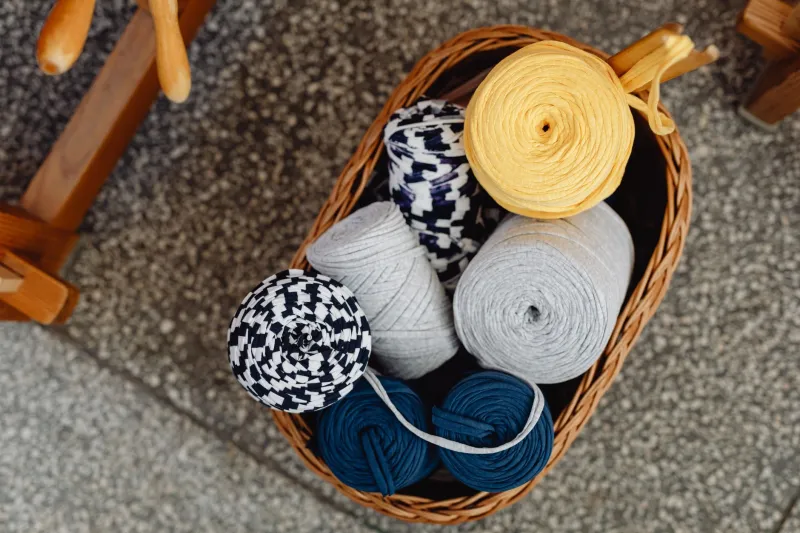
Somewhere in your home, there is a bag of yarn that has never met a needle. Next to it, probably, sits an untouched woodburning kit and a watercolor set still sealed in plastic. On the shelf above those: a leather-tooling starter bundle, two pounds of air-dry clay, and a cross-stitch kit featuring a barn owl saying something sarcastic.
You bought all of this with genuine, luminous intention. You meant every single purchase. And yet here we are.
Welcome to the Museum of Almost. Admission is free. The gift shop is your Amazon cart.
The Purchase Is the Point
Here's the thing that nobody wants to say out loud but everyone is thinking: buying the supplies feels like doing the hobby. It really, genuinely does. There's a rush that arrives the moment you click "Add to Cart" on a beginner's macramé kit — a warm, competent feeling, like you've already made the wall hanging, already photographed it in golden-hour light, already received the comments saying wait, you MADE this?!
Psychologists have a term for this: "identity-based purchasing." When we buy supplies for a hobby, we're not just buying materials — we're buying a version of ourselves. The self who wakes up early and paints. The self who unwinds by carving little wooden spoons. The self who, and this is important, has a creative outlet.
That self is extremely appealing. That self probably also drinks enough water.
The actual doing of the hobby — the frustrating first attempts, the tangled thread, the watercolor that looks less like a sunset and more like a crime scene — that part doesn't come in the kit. And so the kit sits, pristine and full of potential, which is honestly more than most of us can say about ourselves on a Tuesday.
How Instagram Turned Us All Into Supply Gremlins
Let's talk about the algorithm, because the algorithm has absolutely done something to us.
Scroll through any craft-adjacent corner of Instagram or TikTok and you'll find an overwhelming parade of people who are so good at hobbies. They're doing resin art in perfectly lit studios. They're knitting complicated cables while apparently also being relaxed. Someone is doing punch needle embroidery and it looks like therapy and fine art simultaneously.
And the comments — oh, the comments. "This is so healing." "I need to try this." "Adding supplies to my cart RIGHT NOW."
Social media has essentially created a conveyor belt of aspirational craft content designed to make you feel like you are one Joann Fabrics run away from becoming a different person. A calmer, more textured, more artisanal person. The platforms profit from your aspiration. The craft supply industry profits from your aspiration. Everyone is profiting except the yarn, which is just sitting there in a Ziploc bag, slowly losing faith.
Sarah K., a 34-year-old teacher from Columbus, Ohio, describes her relationship with craft supplies as "aggressively optimistic." She has, at last count, materials for seven distinct hobbies: soap making, bookbinding, hand lettering, embroidery, polymer clay sculpting, natural dyeing, and "something involving a Cricut that I still don't fully understand."
"Every time I buy something new, I genuinely believe this is the one," she says. "This is the hobby that's going to stick. And then I watch three YouTube tutorials, feel exhausted, and order Thai food."
The Sunk Cost Closet
Here's where it gets psychologically juicy. Once you've bought the supplies, a second force kicks in: sunk cost fallacy. You've spent $47 on a beginner's linocut kit. You cannot throw it away. You also cannot use it, because using it poorly would somehow be worse than not using it at all. So it stays. It waits. It judges you silently from the hall closet every time you reach past it for the vacuum.
Over time, the collection grows. Supplies beget supplies. You buy the good brushes because the cheap ones "weren't the problem." You buy the better yarn because maybe the scratchy wool was why you quit. You buy the upgraded embroidery hoop because the old one was "probably warping your tension," a phrase you learned from a YouTube comment at 11:45 PM.
The closet becomes a kind of archaeological record of your past selves and their enthusiasms. The felting needles from 2019. The resin molds from the pandemic. The tiny lathe attachment you bought during a very specific three-week period when you were convinced you were going to become a woodturner.
You are not going to become a woodturner. But the lathe attachment stays, because what if?
In Defense of the Eternal Maybe
Here's a hot take that this website is absolutely prepared to defend: maybe this is fine.
Not everything needs to be optimized. Not every purchase needs to result in a finished product. Not every interest needs to be pursued to its logical conclusion. The idea of doing something — really sitting with the possibility of it, imagining yourself as the kind of person who does it — has its own quiet value.
There's a concept in Japanese aesthetics called mono no aware, roughly translated as "the bittersweet awareness of impermanence." The beauty of the cherry blossom is partly because it falls. The beauty of the untouched sketchbook might, in its own chaotic American way, be that it represents possibility that hasn't yet been ruined by reality.
Or maybe that's just what we tell ourselves. Hard to say.
Marcus T., a 41-year-old accountant from Portland who owns enough woodworking tools to outfit a small furniture studio, is philosophical about it. "I've made exactly one cutting board in three years," he says. "It was uneven. My wife uses it. I consider the whole thing a massive success."
One cutting board. Thousands of dollars in tools. A man at peace.
The Supplies Will Outlive Us All
At some point — probably during a move, or a spring cleaning spiral, or a moment of genuine reckoning — you will stand in front of the closet and make decisions. Some supplies will go to a Buy Nothing group. Some will go to a niece who actually does the thing. Some will be quietly relocated to a different shelf, which is not throwing them away, which means you still could.
And then, maybe six months later, you'll see a reel of someone doing botanical illustration and think: I've always wanted to try that.
You'll search for starter kits. You'll find one with good reviews. You'll read that it comes with everything you need.
You'll add it to your cart.
Good for you. Truly. The version of you who does botanical illustration is going to be wonderful.