Tiny Confessions to Nobody: The Secret Emotional Life of Your Notes App

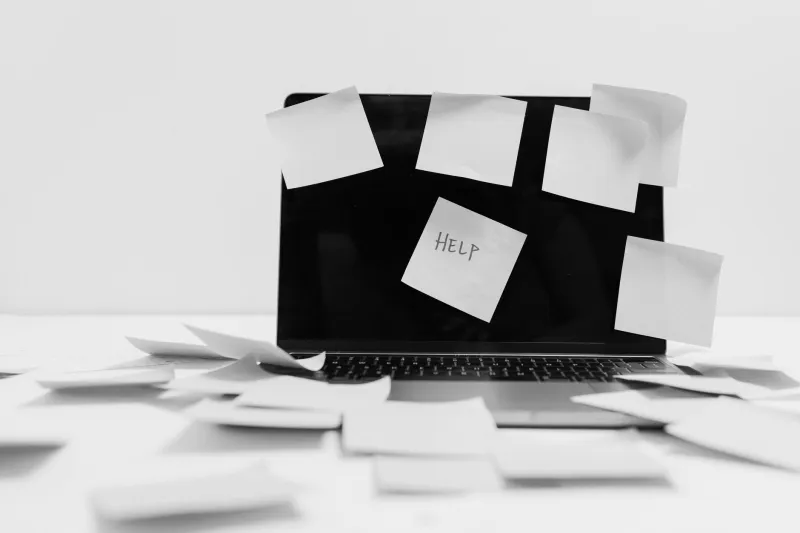
Photo by Photo by Serghey Pandiani on Unsplash on Unsplash
Scroll far enough down your notes app and you'll eventually hit something that stops you cold. Maybe it's a single word — "caramelized" — with no context, no recipe attached, no explanation for why past-you felt it was urgent enough to document. Maybe it's a phone number with a first name you no longer recognize. Maybe it's a full paragraph of something that reads like the opening of a novel, or a manifesto, or a breakup text that was never sent.
Welcome to the graveyard. Population: you, and every version of you that ever had a thought worth saving.
The Most Honest Place on Your Phone
Here's the thing about notes apps — they are aggressively, almost embarrassingly honest. Your texts are performative. Your emails are edited. Your social media is curated to within an inch of its life. But your notes? Your notes are what happens when you talk to yourself without an audience.
And what do we say when nobody's listening? Apparently, a lot of half-finished things.
There's a particular flavor of note that almost everyone has: the idea that arrived with such force you had to get it out immediately, and then — nothing. The momentum just evaporated. A note that reads "what if we've been thinking about sandwiches wrong??" followed by zero additional thoughts. A bulleted list that stops at bullet two. A title with no body. A body with no title. The literary equivalent of a drawer full of dead batteries.
A Taxonomy of Abandoned Thoughts
If you were to sort your notes app the way a slightly unhinged librarian might, you'd probably find a few distinct species living in there.
The Phantom Recipe. You saw something on Instagram — a roasted vegetable situation, a "ten-minute" pasta that definitely takes forty — and you typed out the ingredients before the video ended. You have never, not once, returned to this note to actually cook the thing. But you keep it. Just in case. Just in case the version of you who meal preps and has fresh herbs on hand finally shows up.
The Conversation Starter You're Too Scared to Use. "Ask her about the thing with her sister." "Bring up the documentary about the bees." These are the notes of someone who prepares for human interaction like it's a job interview, then panics at the door and improvises badly anyway.
The 2 AM Revelation. Written in the dark, possibly horizontal, definitely not fully conscious. "Everything is just patterns and we are the noticing." Okay. Sure. You were onto something. Or you were exhausted. Probably both.
The Practical Note That Became a Time Capsule. "Call dentist — Tuesday." Which Tuesday? What year? Who were you then? What were your teeth like?
Why We Keep Them (And Never Delete Anything)
Here's the part that gets genuinely interesting: why don't we clean this stuff out? The notes app is not a physical space. There's no clutter, no dust, no landlord coming to inspect. And yet most people treat their digital note-hoards with the same anxious reverence they'd give a box of old letters.
Part of it is pure superstition. Deleting a note feels like admitting defeat — like officially declaring that the idea is dead, that you will never cook that thing, never write that story, never have the conversation you were preparing for. As long as the note exists, the possibility exists. You are, technically, still a person who might do this.
But there's something else going on, something a little more tender. These fragments are evidence. Evidence that you had a thought, felt something, noticed something worth noticing. The notes app doesn't judge you for the thought you didn't finish. It just holds it. In a world where everything you produce is measured and reacted to and either validated or ignored, there's something quietly radical about keeping a space where incomplete things are allowed to just be.
The Archaeology of Your Own Brain
If you spend any real time scrolling through old notes, you'll start to feel like an archaeologist digging through layers of yourself. The top layer is recent and recognizable — today's to-do list, a thing you Googled. Go deeper and it gets weirder. There are strata of moods, obsessions, anxieties. There's the layer from when you were really into sourdough. The layer from when you thought you might start journaling. The layer from whatever happened in October two years ago that you apparently had a lot of feelings about.
Your notes app is, in a very real sense, a portrait of your attention. Not what you did, but what caught you — what snagged your brain as it moved through the world. That's actually kind of beautiful, even when the content is "need new sponge" and "look up if owls have ears."
(They do, by the way. They just don't have external ear flaps. You're welcome. Add it to your notes.)
In Defense of the Unfinished
We live in a culture that is deeply, almost pathologically obsessed with completion. Finish the project. Ship the product. Post the content. Close the loop. The idea that something could exist in an open, unresolved state — that a thought could just live somewhere without ever becoming anything — feels vaguely transgressive.
But the notes app quietly defies all of that. It is a monument to the in-between. To the "maybe someday." To the 11 PM brain that had a feeling it couldn't quite name but tried anyway.
Nobody is ever going to read your notes app. (And if they do, you have much bigger problems.) That means it's one of the last truly private spaces most of us have — a place where you can be curious, half-formed, contradictory, and weird without consequence.
Keep the note about the sandwich. Keep the phone number you can't place. Keep the one that just says "REMEMBER THIS" with no indication of what this was.
They're not clutter. They're proof you were here, thinking, reaching for something — even if you never quite got there.
And honestly? That's enough.