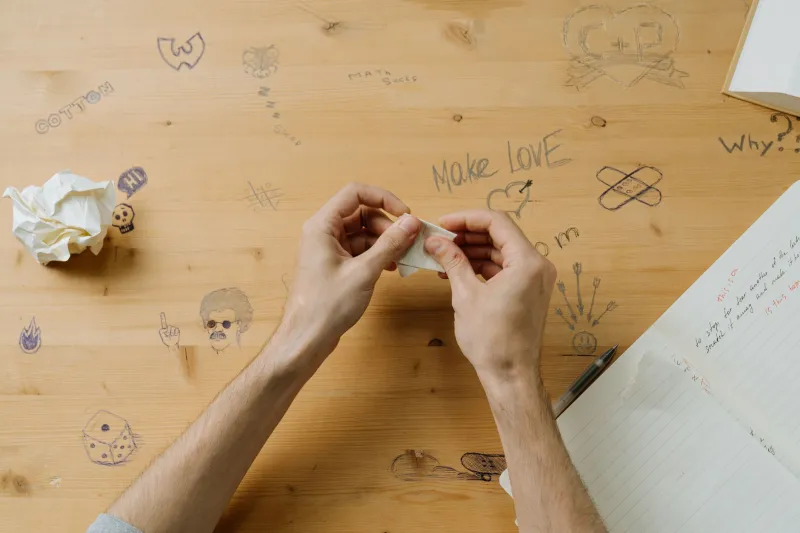
Genius Expires at Dawn: The Strange, Sacred Magic of 2 AM Ideas
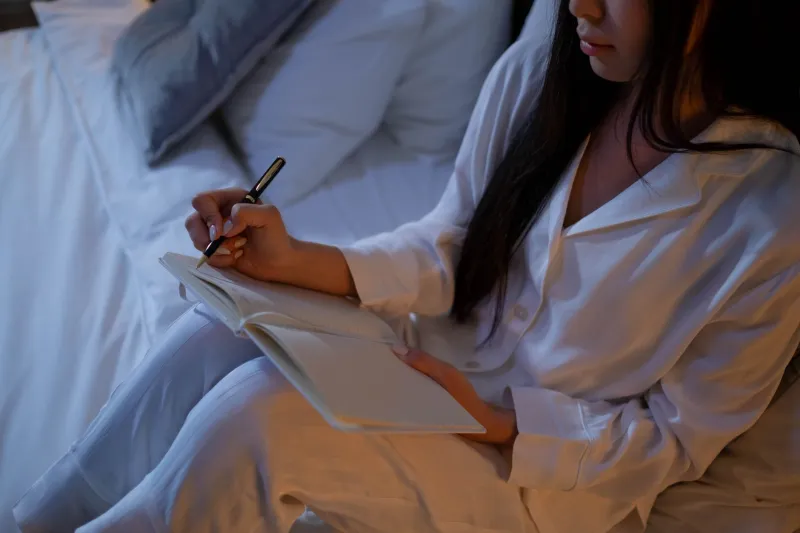
There is a specific kind of confidence that only exists between the hours of 1:47 and 3:12 AM. It is the confidence of a person who has just, lying in the dark with one foot inexplicably hanging off the mattress, solved something. Maybe it's a career pivot. Maybe it's the plot of a novel. Maybe it's a business idea involving personalized hot sauce subscriptions for dogs. Whatever it is, it feels real. It feels important. It feels like the kind of thing that deserves to be scrawled on the back of a receipt that you will absolutely never find again.
By 9 AM, of course, the receipt is gone, the idea is half-remembered, and you're standing in front of the coffee maker trying to reconstruct the scaffolding of what you were so sure was genius. Spoiler: the dog hot sauce thing is still kind of interesting, but you can't figure out why you thought it was urgent.
Welcome to the 2 AM Idea Economy, where the currency is vivid and the exchange rate collapses at sunrise.
Why Your Sleeping Brain Is Apparently Running a Creative Agency
Sleep scientists — real ones, not the kind who just have strong opinions about melatonin gummies — have spent considerable energy trying to explain why the pre-sleep and middle-of-night brain seems to generate ideas with such alarming enthusiasm.
The short version: your prefrontal cortex, the part of your brain responsible for judgment, self-editing, and the reasonable voice that says maybe don't send that email, starts to quiet down as you get tired. What's left is a more associative, less filtered version of your thinking. Connections get made between ideas that your daytime brain would have chaperoned away from each other. The weird gets to hang out with the practical. The absurd gets to shake hands with the sincere.
Dr. Shelby Marren, a cognitive neuroscientist at a mid-sized research university who has spent way too many waking hours studying what happens to people when they're almost asleep, describes it this way: "The hypnagogic state — that threshold between wakefulness and sleep — is genuinely associated with loosened cognitive inhibition. People aren't wrong that they feel more creative. They are, in a measurable sense, less blocked."
So the ideas aren't fake. They're just... unguarded. Like a version of you that skipped the internal focus group.
The Notes App Graveyard
Ask any creative professional — a graphic designer, a songwriter, a novelist, a person who makes very elaborate charcuterie boards for Instagram — and they will show you the notes app on their phone with the expression of someone opening a time capsule buried by a stranger.
Jamila, a 34-year-old art director in Chicago, pulled hers up mid-conversation for this article. The entries include: "orange but make it a feeling", "what if the logo breathed", "call mom (not idea)", and, mysteriously, "the thing with the chairs — YOU KNOW THE ONE."
She does not know the one.
"I have this whole system," she said. "I write it down, I tell myself I'll expand on it in the morning, and then in the morning I'm just a person who needs coffee and has no idea what 'orange but make it a feeling' means as a deliverable."
This is the central tragedy of the 2 AM idea: it arrives fully formed in its own internal logic, and that logic is written in a language only your half-asleep brain speaks fluently.
Were They Actually Good, Though?
Here is the uncomfortable question lurking under all of this: were the ideas ever actually good, or did the dark just make them feel that way?
The answer, annoyingly, is yes to both.
Research on creative incubation — the process by which the brain works on problems in the background while you're doing other things, including sleeping — suggests that genuine insight does emerge from rest states. The famous examples are everywhere: Kekulé dreaming of a snake eating its tail and waking up with the structure of benzene. Paul McCartney hearing "Yesterday" in a dream. The inventor of the sewing machine reportedly dreaming of spears with holes near the tips.
But for every benzene ring, there are ten thousand notes that just say "PODCAST: but for feelings?" and trail off.
Marcus, a 28-year-old musician in Austin, keeps a voice memo folder he calls "The Vault" specifically for late-night musical ideas. "Maybe fifteen percent of them are genuinely useful," he said. "Another thirty percent are interesting but not finished. And the rest are just me, clearly half-asleep, humming something that turns out to be a slightly wrong version of a Radiohead song I already knew."
The ratio, in other words, is not great. But it's not nothing.
How to Actually Catch the Good Ones
Creative professionals who have made peace with their 2 AM brains tend to follow a few loose principles that are worth stealing.
Lower the capture bar. Don't try to write a complete idea. Write one word. Draw a terrible sketch. Voice memo a single sentence. The goal is a breadcrumb, not a map.
Don't evaluate in the dark. The worst thing you can do with a late-night idea is immediately try to stress-test it. That's not what the 2 AM brain is for. Just catch it. The morning brain can decide if it's worth anything.
Give it 48 hours. Sleep scientists and creative coaches alike will tell you that the sweet spot for evaluating a late-night idea isn't the next morning — it's a day or two later, when you've had enough distance to see it clearly but not so much that you've forgotten why it felt exciting.
Expect a low hit rate and be fine with it. If one in ten of your 2 AM ideas turns out to be genuinely useful, that's a better return than most investments. The rest are just the creative brain warming up, doing its weird stretches, being alive.
The Real Value of the 2 AM Brain
Maybe the point isn't the ideas themselves. Maybe the point is what it means that you're having them at all.
There's something kind of wonderful about the fact that your brain, given the chance to power down for the night, keeps reaching for things. Keeps trying to make connections. Keeps insisting, even in the dark, that there's something worth figuring out. The 2 AM idea is your mind refusing to fully clock out. It's optimism in its most unguarded, unpolished form.
Yes, most of the notes will be incomprehensible. Yes, the dog hot sauce thing probably isn't a viable business. But somewhere in that Notes app graveyard, scrawled on the back of an invisible receipt, is the thing that started something real.
You just have to be awake enough to find it. Which, given the circumstances, is the whole problem.