In Loving Memory of the Hobbies We Were Absolutely Going to Do
Here lies Sourdough Starter, September 2020 – November 2020. Beloved briefly. Fed twice.
Let us begin with a moment of silence for everything you were going to learn.
The watercolor set. The guitar that's leaning against the wall in a very specific way that suggests it might get picked up again soon, but won't. The calligraphy kit still in its Amazon box. The embroidery hoop with the half-finished floral pattern that looks less like a peony and more like a beige explosion. The sourdough starter, God rest its soul.
Every one of these objects was purchased with genuine, full-hearted intention. Every one of them represents a version of you — optimistic, capable, the kind of person who makes things with their hands — that flickered briefly into existence and then quietly went back to watching TV.
This article is a love letter to that person. And also a very gentle autopsy.
The Anatomy of a Hobby Purchase
The lifecycle of an abandoned hobby follows a pattern so consistent it could be charted.
Phase 1: The Inspiration. You see something — a friend's Instagram reel, a craft fair booth, a particularly cozy YouTube video of someone doing a thing — and something in your chest says I could do that. I want to do that. That would make me the kind of person who does that.
Phase 2: The Research. This is actually the most enjoyable part of the entire hobby, and if we're being honest, it might be the only part you ever really loved. You spend three to five evenings going deep on Reddit threads, watching beginner tutorials, comparing starter kits. You know more about the hobby at this point than you will at any other moment in your relationship with it.
Phase 3: The Purchase. You buy the supplies. Not the cheap supplies — the good ones, because you're serious about this. You're not messing around with the $12 beginner set. You're getting the $74 one with the carrying case.
Phase 4: The Arrival. The box comes. You open it. You arrange the supplies on a surface and photograph them, possibly. You feel the future.
Phase 5: The First Attempt. It goes okay. It's harder than the YouTube person made it look. You are not immediately good at it, which is fine, that's normal, you knew that going in.
Phase 6: The Second Attempt That Never Happens. Something comes up. Then something else. The supplies migrate from the table to the shelf. From the shelf to the closet. The closet receives them like an old friend.
Phase 7: The Quiet Understanding. Neither you nor the supplies ever mention it again.
What the Graveyard Actually Looks Like
Across American homes, the abandoned hobby graveyard takes many physical forms. There are the garage quadrants dedicated to the brief cycling phase, complete with a helmet that was worn exactly once and a pump that turned out to be the wrong kind. There are kitchen corners occupied by bread machines, pasta makers, and dehydrators that were going to revolutionize the approach to meal prep and instead became very large, very specific dust collectors.
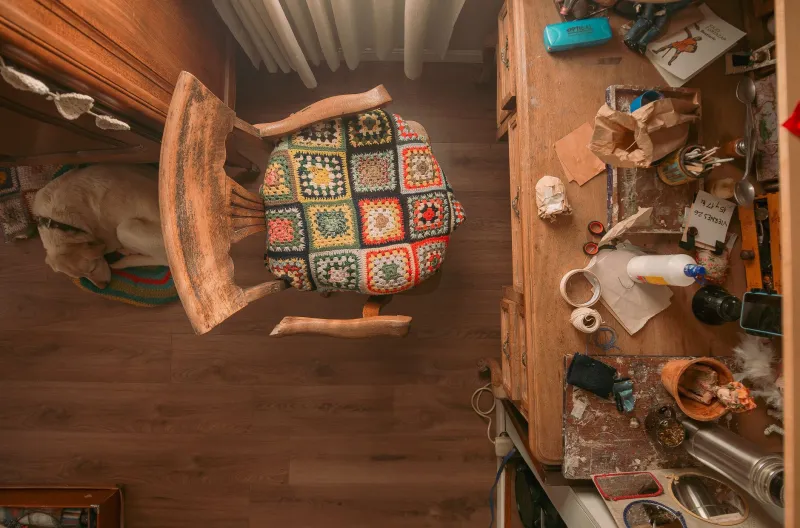
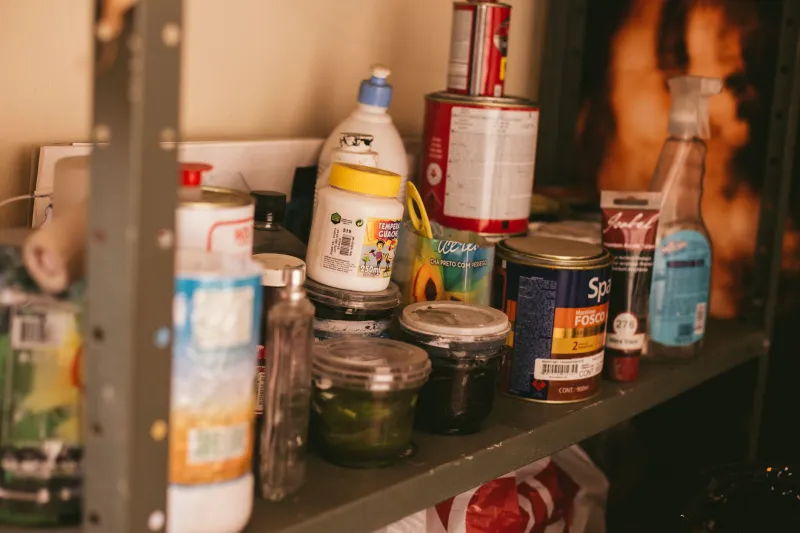
There are the craft rooms — oh, the craft rooms — where the ambition is practically structural. Shelves of yarn in colors that were chosen with purpose. Fabric stacked by shade. Stamps, ink pads, stencils, washi tape in quantities that suggest someone was preparing for a scrapbooking emergency.
Kendra, a 41-year-old project manager in Nashville, gave a tour of her hobby history during a phone call that started as an interview and became something more like a confession.
"I have the pottery wheel," she said. "I have the resin casting stuff, which I used twice and which is genuinely a little dangerous if you don't ventilate properly, which I did not. I have the leather-working kit. I have — and I'm not proud of this — two different sets of lockpicking tools from when I was going to learn lockpicking."
Why lockpicking?
"I watched a video. It looked like something a competent, interesting person would know how to do."
This is, in fact, the heart of it.
The Person You Were Buying For
Every abandoned hobby purchase is a transaction with a fictional future self. Not the self who has a full-time job and a family and a complicated relationship with motivation, but the other self. The one who gets up early on Saturdays, who has a dedicated workspace, who has figured out the balance between productivity and creativity and makes it look effortless.
That person would have absolutely used the bread machine. That person would have learned to throw a pot. That person has a handmade wreath on their front door and made it themselves and knows it.
You are not that person. You are a different, also valid, person who occasionally watches videos of that person on YouTube and feels a complicated mixture of inspiration and low-grade guilt.
The supplies you bought were not wasted. They were an investment in the idea of yourself — a down payment on a life that felt, for a moment, genuinely possible.
The Case for Keeping the Supplies
Here is an unpopular position: don't get rid of the stuff.
Not all of it, not forever, but don't rush to Marie Kondo your way through the hobby graveyard just because the initial enthusiasm faded. Interests are not linear. The guitar you put down at 25 might be the thing you pick up again at 40 and actually stick with, because something in you has shifted and the timing is finally right.
Dave, a 52-year-old accountant in Portland, bought a telescope in 2003, used it three times, and stored it in his attic for sixteen years. In 2019, he pulled it out on a whim during a clear November night and hasn't put it down since. He's now part of an amateur astronomy club and has named a personally discovered asteroid feature after his dog.
"The telescope was just waiting," he said. "I wasn't ready for it yet. That's all."
Not every abandoned hobby is a failure. Some of them are just early.
A Eulogy, With Optimism
So here is what the unfinished hobby graveyard actually is, if you look at it right: it's evidence of a person who keeps trying. Who keeps seeing something in the world and thinking I want to be closer to that. Who keeps reaching, even impractically, even expensively, even when the bread machine ends up just taking up counter space.
The lighthouse paint-by-numbers is unfinished. But you started it. You sat down one afternoon and opened the little pots of paint and thought, for a moment, about light on water. That's not nothing. That's actually kind of everything.
The ukulele is dusty. But somewhere, in a version of you that exists in the future, it might not be.
Keep the supplies. Lower the expectations. And the next time something looks interesting — the candle-making, the amateur radio, the absolutely unhinged idea of learning to juggle — go ahead and look into it.
You might actually do it this time.
Or you might get a very nice kit to put in the closet.
Either way, you'll always have the research phase.