Nobody Texted You. You Checked Anyway. Welcome to the Loop.
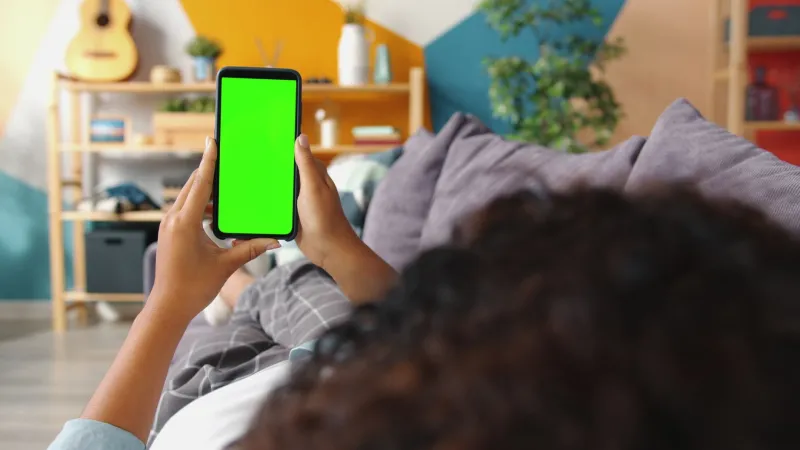
It happens in the cereal aisle at Kroger. It happens during the good part of a movie. It happens at 2:47 in the afternoon when you are, by all accounts, doing fine. Your thigh tingles. Your hand moves. You're already looking at a screen that shows you nothing — no texts, no emails, no notifications of any kind — before your conscious brain has even had time to ask why.
You weren't waiting for anything. Nobody important was supposed to reach out. And yet here you are, phone in hand, staring at a lock screen like it owes you money.
Welcome, dear reader, to the phantom notification. Population: basically everyone with a smartphone and a functioning nervous system.
Your Brain Is Running Software It Did Not Ask For
Here's the thing about phantom vibrations — and yes, that's the actual clinical term, coined by researchers who apparently had the same embarrassing experience in a grocery store — they are not a glitch. They are, in the most unsettling way possible, your brain working exactly as designed.
Humans are pattern-recognition machines. We survived millennia by being hypervigilant to signals: a rustle in the bushes, a change in the wind, a sound that might mean something is coming. That ancient alarm system didn't get a firmware update when the iPhone dropped. Instead, it just... adapted. Now, instead of scanning for predators, your nervous system is scanning for the buzz of social contact. It has decided that a notification is important. It has decided that missing one would be bad. And so it has started hallucinating them, just to keep you on your toes.
Studies have found that anywhere from 68 to 89 percent of smartphone users have experienced phantom vibrations. College students report them most frequently, which tracks, because college students are also the demographic most likely to be waiting anxiously for a text back from someone who is definitely not going to text back.
The Anxiety Loop Nobody Signed Up For
What makes this particularly rich is the feedback mechanism it creates. You feel a phantom buzz. You check your phone. There's nothing there. You feel a small, stupid wave of disappointment — or relief, or just vague existential flatness. You put your phone down. Thirty seconds later, you pick it up again, just to make sure.
This is not rational behavior. You know it isn't rational behavior. And yet the loop continues, because your brain has now logged "checking phone" as a self-soothing action. The check itself becomes the reward, independent of whether anything was actually there. You're not looking for a message anymore. You're looking for the feeling of having looked.
Silicon Valley did not accidentally build platforms that exploit this. The variable reward schedule — sometimes there's something, sometimes there isn't, and you never quite know — is the same psychological mechanism that makes slot machines so effective. Your phone is a slot machine that lives in your pocket and occasionally shows you a photo of someone's brunch.
The Rituals We've Built to Cope
What's genuinely fascinating — and very Merl Merl of us to notice — is how creative people have gotten in managing this particular flavor of digital paranoia.
There's the preemptive check, where you look at your phone before sitting down somewhere, as if clearing the board. There's the double-check, where you glance at your phone, put it face-down, and then immediately flip it back over because what if something came in during those four seconds. There's the decoy pocket, where you put your phone in a different pocket than usual and then spend the next hour mildly confused about where your leg went.
Some people have started leaving their phones in another room, not out of discipline, but because they've essentially decided to break up with the anxiety loop and need physical distance to make it stick. Others have turned on "Do Not Disturb" not because they don't want to be reached, but because they need the permission of a setting to stop expecting contact.
And then there are the people — you know who you are — who have started narrating the check to themselves. I'm just looking. There's nothing there. That's fine. That's what I expected. Okay. Good. Great. We're good.
What It Actually Reveals About Us
Strip away the neuroscience and the app design and the variable reward schedules, and what you're left with is something pretty human: we want to matter to people. We want to know that someone, somewhere, is thinking about us enough to reach out. The phantom notification is just the modern expression of a very old ache.
In that sense, it's almost sweet. Your nervous system, ancient and earnest, has decided that staying connected is survival-level important. It's doing its best with the tools available. Unfortunately, the tools available are a glass rectangle full of group chats you've muted and an email newsletter you forgot you subscribed to in 2019.
The phantom buzz is your brain saying someone might need you. The empty lock screen is reality saying it was just your leg.
How to Make Peace With the Nothing
There's no clean fix here, which is honestly kind of freeing. You can't logic your way out of a reflex. But you can start noticing the loop — actually noticing it, with some affectionate detachment — and that noticing creates a tiny bit of space between the phantom feeling and the automatic reach.
Some people find it helps to check their phone intentionally at set intervals, rather than reactively every time their brain sounds a false alarm. Others swear by grayscale mode, which makes the phone visually boring enough that checking it feels less like scratching an itch and more like looking at a receipt.
But honestly? The most useful thing might just be knowing that you're not broken. You're not uniquely anxious or pathetically dependent. You are a human animal that evolved to seek connection, handed a device specifically engineered to keep you seeking it, doing your level best to function in a world that is genuinely a little too much sometimes.
Your phone didn't buzz. You checked anyway. It happens to almost everyone, almost every day.
At least now you know why.