Your Phone Is Right There. Nothing Happened. So Why Does Your Brain Disagree?
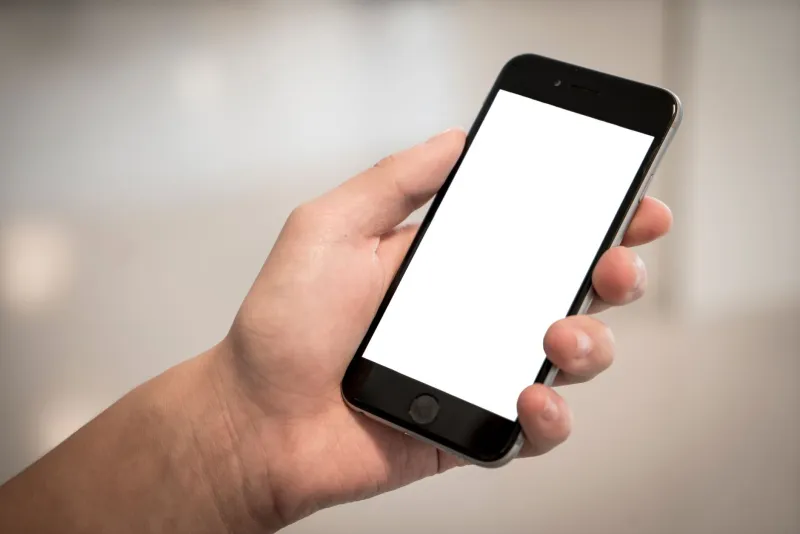
It happens somewhere between your second cup of coffee and a meeting you're definitely not paying attention to. A vibration. Subtle, insistent, real. You glance down with the practiced nonchalance of someone who absolutely was not hoping for a text. The screen is dark. No alerts. No messages. Not even a promotional email from a mattress company you bought from once in 2019.
Your phone didn't buzz. But you felt it buzz. And here's the part that should unsettle you just a little: your brain is not sorry.
This is phantom vibration syndrome — yes, that's a real thing with a real clinical-adjacent name — and it's happening to somewhere between 68 and 89 percent of smartphone users, depending on which study you believe. Which means the odds are very, very good that you are not special in your delusion. You are, in fact, magnificently ordinary.
The Brain That Cried Notification
Here's what's actually going on under the hood. Your nervous system, bless its overcaffeinated little heart, is genuinely trying to help you. It has learned — through thousands of repetitions of buzz, check, reward — that incoming messages are meaningful. They mean someone thought of you. Someone wanted your attention. In the grand hierarchy of human needs, being noticed sits right up there with food and shelter, which is embarrassing but also deeply true.
So your brain, ever the eager intern, starts pattern-matching. Any sensation that could be a notification gets flagged. A muscle twitch in your thigh. The brush of fabric against your hip. The ambient hum of an air conditioner hitting a specific frequency. Your nervous system submits all of these as potential candidates, and sometimes — more often than any of us would like to admit — it files a false report.
Researchers call this a "hyperactive agency detection" response. Your brain is so primed to find signals that it starts manufacturing them. It's the same mechanism that makes you see faces in clouds or hear your name called in a crowded restaurant when nobody said anything. Your mind is fundamentally, structurally desperate to find meaning in noise.
The Anxiety That Lives in Your Pocket
But phantom vibrations are only half the story. The other half is phantom visual notifications — that moment when you pick up your phone for no reason, unlock it, stare at the home screen, and then put it back down having accomplished absolutely nothing. You weren't responding to a buzz. You weren't checking the time. You just... needed to look. Just in case.
Just in case what, exactly?
This is where notification anxiety gets genuinely interesting. Studies out of institutions like the University of Michigan and various other places full of people who study things like this have found that the mere presence of a smartphone — even face-down, even silent — reduces available cognitive capacity. Your brain is quietly dedicating processing power to the possibility of contact. It's running a background app called Maybe Someone Needs Me and it is absolutely destroying your battery life, metaphorically speaking.
The FOMO piece of this is well-documented at this point, but what's less discussed is the strange comfort embedded in the phantom notification experience. Think about it: when you feel that fake buzz, there's a microsecond of genuine warmth before reality corrects the record. A flash of oh, someone's reaching out. The disappointment that follows is real, but so was that brief glow. Your brain conjured connection out of nothing, and for just a moment, it worked.
That is either very sweet or very sad, and honestly it might be both.
We Built This Particular Cage Ourselves
It would be easy to blame the apps. And look, the apps deserve a significant portion of blame — the entire notification architecture of modern smartphones is engineered to create exactly this kind of Pavlovian dependency. The red badge on the icon. The pull-to-refresh gesture that mimics a slot machine lever with almost suspicious precision. These are not accidents. These are features.
But humans were doing versions of this long before smartphones. People have always been wired to watch for signals from their social group. Waiting for a letter. Listening for footsteps on the porch. Checking the driveway for a car that might or might not show up. The technology changed; the underlying hunger didn't.
What smartphones did was compress the cycle down to seconds and make it available 24 hours a day. Your ancestors might have checked the mailbox once a day. You are checking a digital equivalent roughly every twelve minutes, according to various studies that will make you feel briefly terrible about yourself before you immediately check your phone.
What To Do With This Information (Probably Nothing)
Here's the part where a responsible article would offer solutions. Digital detox tips. Notification audits. Scheduled phone-free hours. And sure, those things exist and some people swear by them and genuinely good for those people, truly.
But let's be honest about something: knowing that your brain hallucinates notifications doesn't really make you stop checking. Understanding the psychology of phantom vibrations doesn't silence the phantom vibrations. You can read every study, nod along thoughtfully, and still reach for your phone thirty seconds later because what if this time.
What this information can do is make you feel slightly less alone in the experience. The next time you feel that ghost buzz and look down to find nothing, you're not losing your mind. You're just a person with a nervous system that was designed for a world that no longer exists, running that ancient social-monitoring software on completely modern hardware.
Your brain is doing its best. It just has absolutely no idea what century it's in.
The Notification That Was Always About You
There's one more layer to this whole thing, and it's the one that gets a little uncomfortable. The phantom notification, at its core, is your brain expressing a need. Not a need to check your phone, specifically, but a need to matter to someone. To be on someone's mind. To exist in another person's awareness.
That's not a phone problem. That's a human problem. A very old, very universal, very un-fixable human problem that we have simply found a new and extremely inconvenient way to express.
So the next time your pocket lies to you — and it will, probably within the next few hours — maybe take a second before the disappointment sets in. Your brain was just trying to tell you something. Not about a message that doesn't exist, but about a need that very much does.
Also, you might want to check your phone. Just in case.